
RE-cast
Wind and sun, scheduled block by block.
RE-cast forecasts generation for solar and wind plants in 15-minute blocks, day ahead and intraday. It combines a physics tier built on irradiance and turbine power curves with a machine-learning tier trained on each plant's own output.
Start a free 90-day pilotStarts with a 45-minute walkthrough on live data, then a free 90-day pilot on your own data.
Download the brochure PDF, 7 pages, 5.6 MB
Physics and learning together
Irradiance, temperature and power-curve physics set the shape. A per-plant model learns what the physics misses, such as soiling and curtailment habits.
Scored against the meter
Forecasts are stored as issued and compared with each plant's metered output, so improvement is measured rather than assumed.
Built for the schedule
Output arrives in the 96-block format that scheduling and deviation settlement already use, with revisions through the day.
The day, as RE-cast runs it
Three revisions, one rolling intraday, and a band around every block.
Plant-level generation forecasts from real weather, satellite and SCADA data, turned into the 96-block schedules an SLDC accepts, the revisions a QCA must file, and the deviation numbers the bill is settled on.
- 10:00R0, day-aheadFirst schedule for tomorrow.
- 17:00R1, day-aheadEvening weather-model run folded in.
- 05:00R2, day-ofOvernight SCADA and satellite.
- Every 15 minIntraday0 to 6 hours ahead.
- 06:00Week-ahead96 × 7 blocks for planning and maintenance.
- Forecast to schedule to SLDC file
- The schedule builder turns the P50, or your chosen quantile, into the 96-block sheet, applies revision caps and holidays, and exports the SLDC's own XLSX layout. State templates are switchable per plant.
- Curtailment and ramps, seen for what they are
- Curtailment detection separates a dispatch instruction from a forecast miss. Ramp events are logged with cause and magnitude so a deviation is explained, not just counted.
- Every plant type on one registry
- Ground-mounted, rooftop and floating solar; onshore wind by IEC class; wind and solar hybrids, with or without storage; distributed and behind-the-meter fleets by statistical upscaling.
- Multi-state by design
- Plants partition by state; each state's SLDC clock, XLSX template and DSM rules are configuration, not code.
Forecasting engine
Physics first, learned corrections second, calibrated bands last.
,_RTW_2012_(8405113117).jpg)
- Tier 1: physical and learned models
- Weather-to-power physics for solar (irradiance transposition, clear-sky ratio, module temperature, tracker geometry) and wind (power curves, air density, wake maps, terrain). Alongside them, gradient-boosted trees, sequence models and statistical persistence, each trained per plant on its own SCADA.
- Tier 2: ensemble
- A stacking meta-learner blends the tier-1 members; weights adapt nightly on a rolling 30-day window; regime switching gates members by clear-sky ratio and wind regime.
- Tier 3: post-processing
- Bias correction, curtailment detection, behind-the-meter correction, ramp detection, and probabilistic calibration so the P10 to P90 band means what it says.
- No synthetic forecasts
- Every forecast is generated from real weather, satellite, SCADA and metering data. Demo and simulation paths are removed from production builds. Accuracy is scored nightly against SCADA, per plant and per horizon, and reported inside the product, never as a brochure number.
| Source | What it provides |
|---|---|
| Global weather models | GFS, ECMWF IFS and ICON, refreshed every cycle; direct ECMWF open-data backup |
| Reanalysis | MERRA-2 for training history and clearness-index climatology |
| Satellite irradiance | SARAH-3 (CM SAF) and CAMS McClear for training; INSAT-3DR via MOSDAC on registration |
| Plant SCADA | REST ingestion or Modbus gateway; 5-minute polling consolidated to 15-minute blocks; nacelle, rotor, pitch and status; GII, module temperature, inverter DC and AC |
| Site physics | PyWake wake maps, 30 m terrain, per-block air density, rainfall-derived soiling calendars, fixed, single-axis and dual-axis trackers |
| Grid and market | SLDC dispatch and curtailment scans; exchange price references; outage and maintenance register |
QCA operations
The forecast is the start. The filing, the de-pooling and the settlement are the job.
- Forecast
- Schedule
- File
- Actuals
- De-pool
- Settle
- Schedule builder
- Quantile choice, manual overrides with audit, revision numbering, cap enforcement, maintenance and holiday calendars.
- SLDC submission
- The 96-block XLSX the despatch centre expects, generated in seconds for a fleet, with a submission log per plant and revision.
- Meter data entry and smart import
- Typed entry, bulk files and an importer that recognises common SLDC and meter layouts.
- De-pooling
- Pooling-substation totals allocated to constituent plants by declared capacity and availability, with the allocation retained.
- Deviation and DSM charges
- Block deviation against the filed schedule; charge tables per state and effective date; direction-aware.
- Commercial settlement and bank guarantees
- Settlement statements per plant and period; a guarantee tracker with expiry and utilisation.
- Bridge to REDSM
- Every filed schedule and curtailment flag can be published to AION's deviation settlement platform, so forecast, schedule and bill share one plant identity end to end.
- Backtest before you trust
- Replay any plant over any window with the model set of your choice, and compare members, horizons and quantiles against SCADA before promoting a change.
- SLA and fallback logic
- If a weather source is late, the next one is used and the fallback is recorded. If SCADA stops, persistence takes over and the switch is visible. Nothing fails silently.
- Data vendors and cost
- Every external call is metered; a vendor page shows what each source costs per plant per month and what it contributes.
One console for the QCA desk
Everything the operator touches, and everything the auditor asks for.
.jpg)
- Operations home
- Fleet status, today's revisions, deviations in flight, data-feed health.
- Plant registry and detail
- Capacity, type, tracker, turbine class, SCADA mapping, state and substation membership.
- Forecast
- Per plant and horizon; band and members; override with reason.
- Forecast scoring
- Per plant, per horizon and per revision, scored nightly against SCADA.
- Weather ensemble status
- Which model runs arrived, when, and which members the ensemble used.
- Ramp events
- Detected ramps with magnitude, duration and attributed cause.
- Actuals
- 15-minute consolidated SCADA and meter series with gap flags.
- Deviation, de-pooling and settlement
- The commercial chain in three pages.
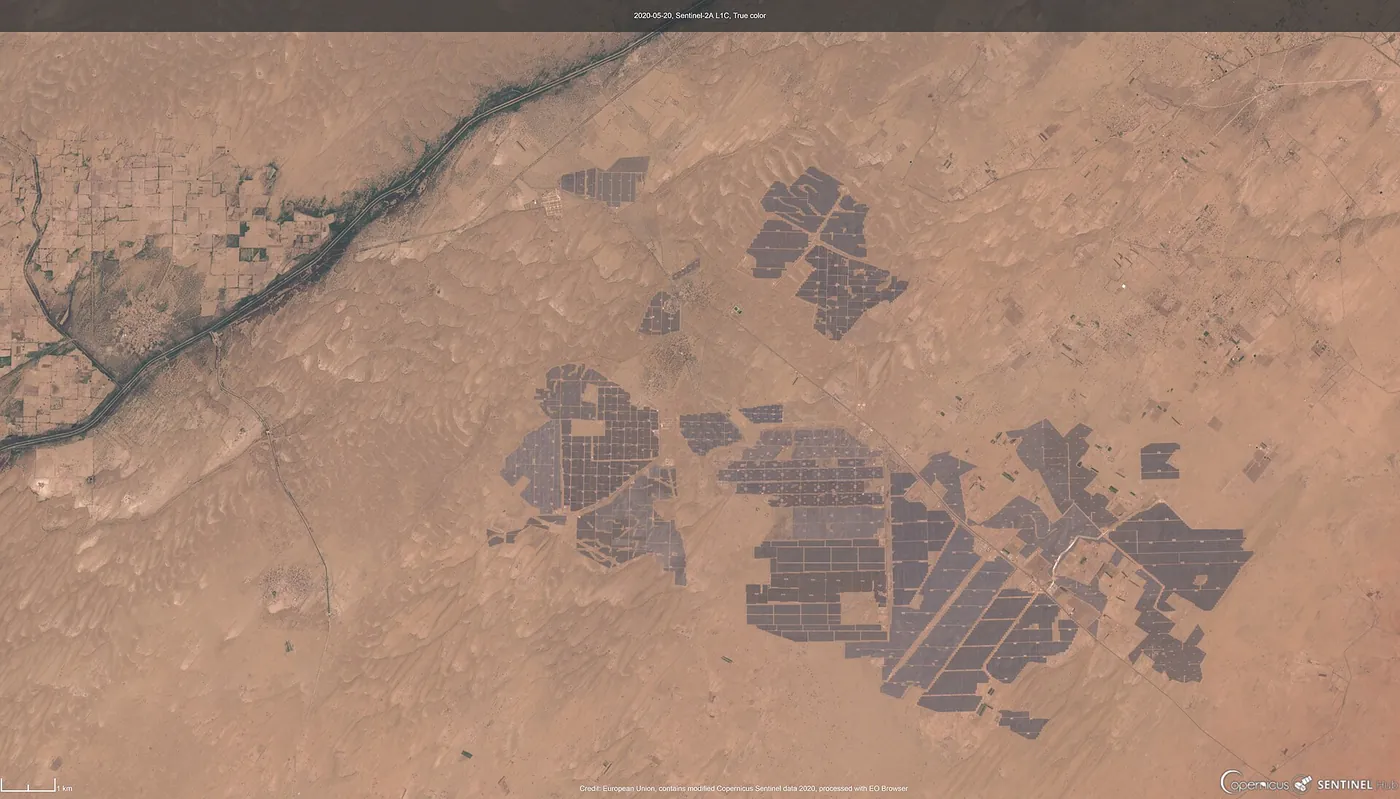
- Solar and wind asset detection
- Satellite imagery reviewed to confirm plant footprints and turbine positions against the registry.
- Holiday and maintenance calendar
- Planned outages and holidays feed the schedule automatically.
- Audit log and API reference
- Every change with who and when; every endpoint documented for integrators.
- Configuration and MFA
- Roles for QCA, generator, utility and admin; multi-factor login for privileged roles.
Built for the tender, checked against it
A compliance matrix inside the product maps every functional requirement to the module that implements it, with its status. What is configured but awaiting onboarding is labelled as such.
Runs where you need it
A containerised three-tier stack of API, time-series database with geospatial support, queue and workers, on your cloud tenancy or on premises. A pilot instance stands up on a single VM.
What it does
- Day-ahead and intraday forecasts in 15-minute blocks
- Numerical weather model inputs with fallbacks when a source is late
- Physics tier for solar irradiance and wind power curves
- Machine-learning tier trained per plant and blended with the physics tier
- Designed to feed REDSM scheduling directly
Who it is for
- QCAsForecast, file, de-pool and settle for every represented plant from one console, with revisions on the SLDC clock and the audit trail a generator will ask for.
- Generators and IPPsPlant-level forecasts with bands, ramp and curtailment explanations, and a deviation view that shows which blocks cost money and why.
- SLDCs and state utilitiesAggregated RE forecasts by pooling station and state, in the 96-block layout you already accept, with a curtailment record both sides can read.
- DISCOM RE desks and tradersWeek-ahead and day-ahead fleet views for procurement and exchange positions, with the band as the risk measure.
The free 90-day pilot
One forecast, four desks, and 90 free days to prove it on your plants.
Weeks 1 to 2: onboard
Plant registry from your lists; SCADA or meter feed connected; state template selected.
Weeks 3 to 6: shadow
Forecasts and schedules run every day alongside your current filing, scored nightly per plant.
Weeks 7 to 10: operators on the console
Revisions, de-pooling and settlement statements produced in RE-cast; your current process remains the check.
Weeks 11 to 13: file from RE-cast
Go live plant by plant, with the shadow record as evidence.
What we need from you
The plant list with capacities and locations, a SCADA or meter export covering a few months, and the SLDC format you file today.
What you keep
- A per-plant scoring record from your own data.
- The filed-schedule archive.
- A system already configured to your state.
Terms
The 90-day pilot is free. After it, pricing is per plant per month, with the data-vendor cost shown separately and metered. No charge for plants that are not yet forecast.
Send us your plant list. We will send back tomorrow's 96 blocks.
Write with the plants you schedule and the state you file in. We will come back with a pilot plan and a configured instance.
Email info@aionpl.com